Author: Annette Hadaway

  • Nepal Elephant Festival – An Elephant’s Approach

    Nepal Elephant Festival – An Elephant’s Approach

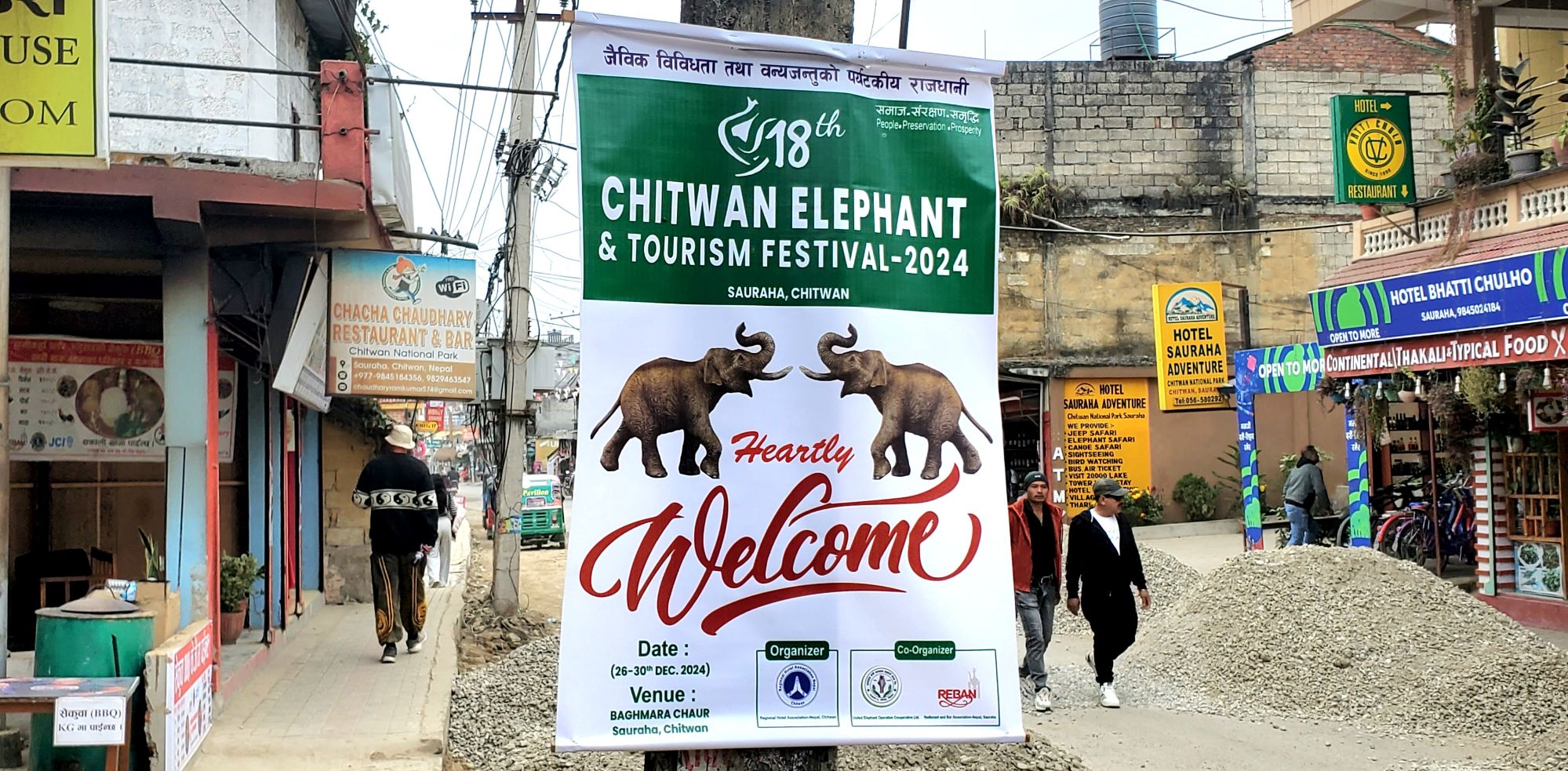
    Elephants Forced To Play Football – Nepal Elephant Festival December 27, 2024 Sauraha Nepal

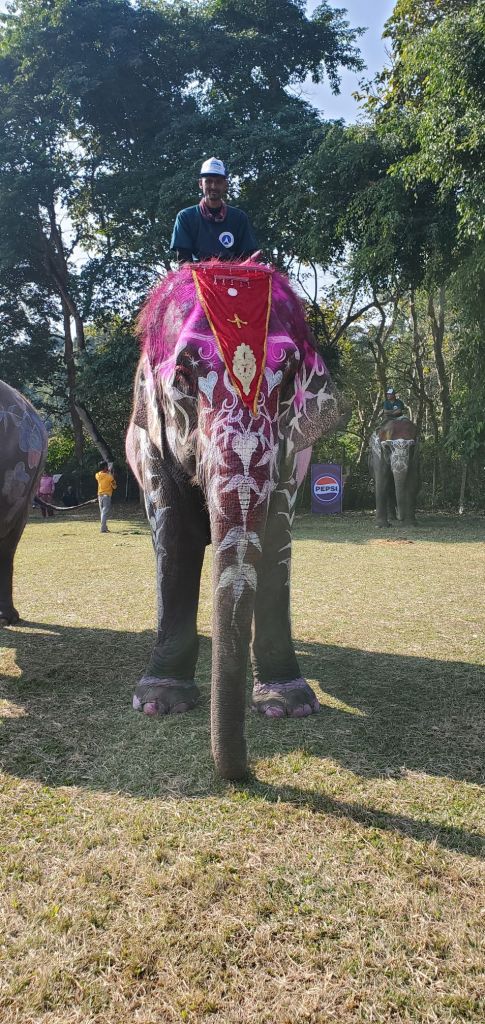
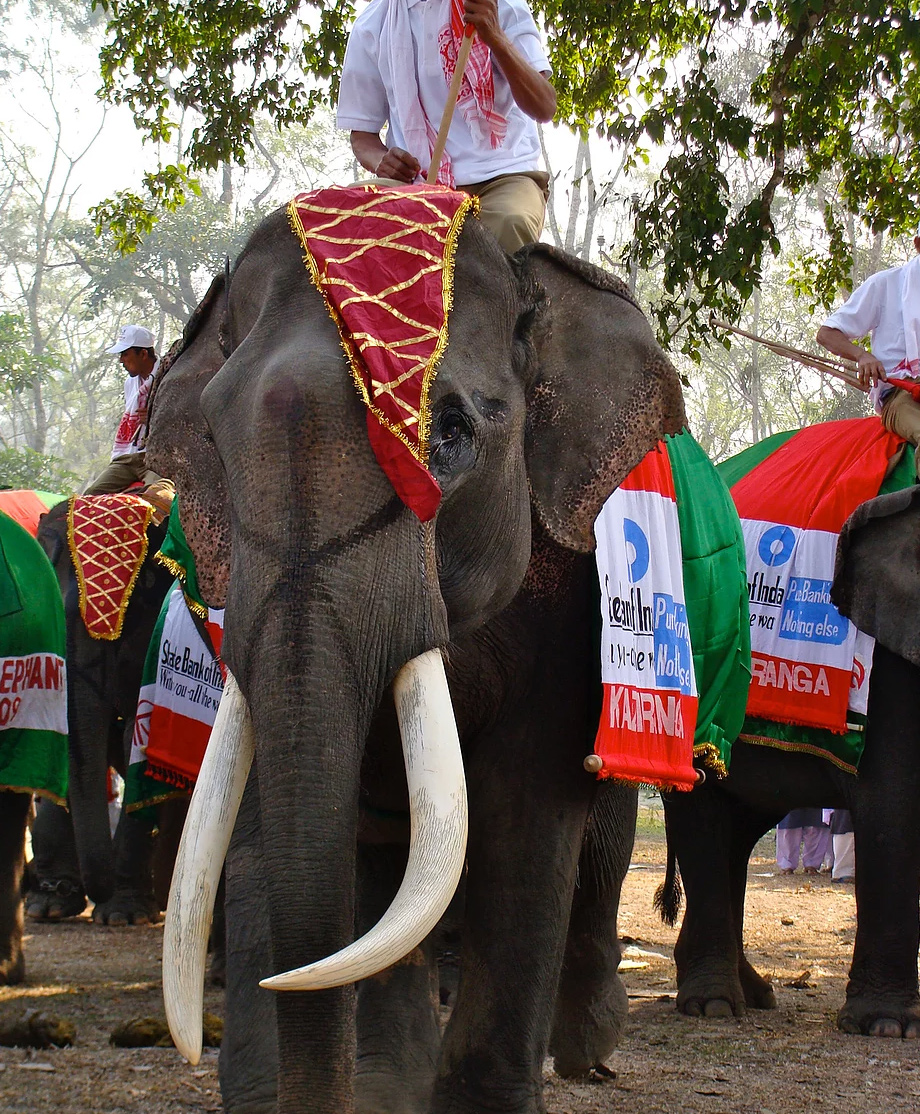
    Painted, Chalked, And Glittered Elephant Forced To Participate In The Beauty Contest – Nepal Elephant Festival December 27, 2024 Sauraha Nepal

    Celebrating Tharu Culture – Nepal Elephant Festival December 27, 2024 Sauraha Nepal

    The local community sets up stalls around the perimeter of the festival selling alcohol, cars, cleaning supplies, crafts, food, honey, internet, jewelry, and toys to earn much needed rupees.

    The elephants shared they would love a different type of festival. An elephant festival where they do not have to participate in the physical. Their suggestion is for humans to hold relay races and human games highlighting the indigenous communities culture.

    There are humans who may not understand why the elephants would not want to participate in the festivals elephant picnic. Elephants are decorated with body chalk, lined up on the festival grounds and forced to eat foods brought in for them. The elephants simply state that they would rather do other things.

    Makuna, a wild elephant decided to attend the last day of the festival. Frightened festival attenders were seen running away. Perhaps if humans like John Abrahams cannot convince the Nepal Government to change the festival maybe the wild elephants will.

    @AchutPuri – YouTube Channel, Makuna Images

    Photo/Video Credit Annette Hadaway

  • Help the Amboseli Elephants and Stop Trophy Hunting

    Help the Amboseli Elephants and Stop Trophy Hunting

    ElephantVoices.org shares that the Amboseli elephant population is a cross-border population inhabiting both Kenya and Tanzania. The ecosystem includes Amboseli National Park and the surrounding conservancies and lands in Kenya (~8,000 km2) and the Enduimet Wildlife Management Area and beyond in Tanzania. There are currently ~2,000 elephants using this ecosystem. For 51 years these elephants have been closely studied by the Amboseli Elephant Research Project (AERP). It is the longest, continuously running study of elephants in the world and one of the longest studies of any animal in the world.

    Each elephant is known individually and has a code number or name and is documented photographically. Birth dates for all but a few of the older individuals are known as well as the mother and the family and, in some cases, the father. A detailed database contains every elephant identified over five decades, including births and deaths and numbers over 4,000 individuals. A linked database houses every recorded sighting. The Amboseli data is an extraordinarily rich and important body of knowledge. Each individual, each record is a building block that underpins this immense scientific achievement gained over the past half a century. Indeed, much of what we now know about elephant behavior, communication, social structure, demography, reproduction and genetics, has resulted from this study.

    There are 63 elephant families in the Amboseli population of which 17 families, consisting of 365 members, regularly spend time in Tanzania. In addition, approximately 30 adult male elephants, over the age of 25 years, use the Enduimet area and beyond in Tanzania as part of their home range. For half a century Enduimet has been a favourite area for a particular set of adult males who make use of it as part of their “bull area”, which is an area they use when they are bulking up for their next reproductively active period. When they are active they return to central Amboseli in search of mates.

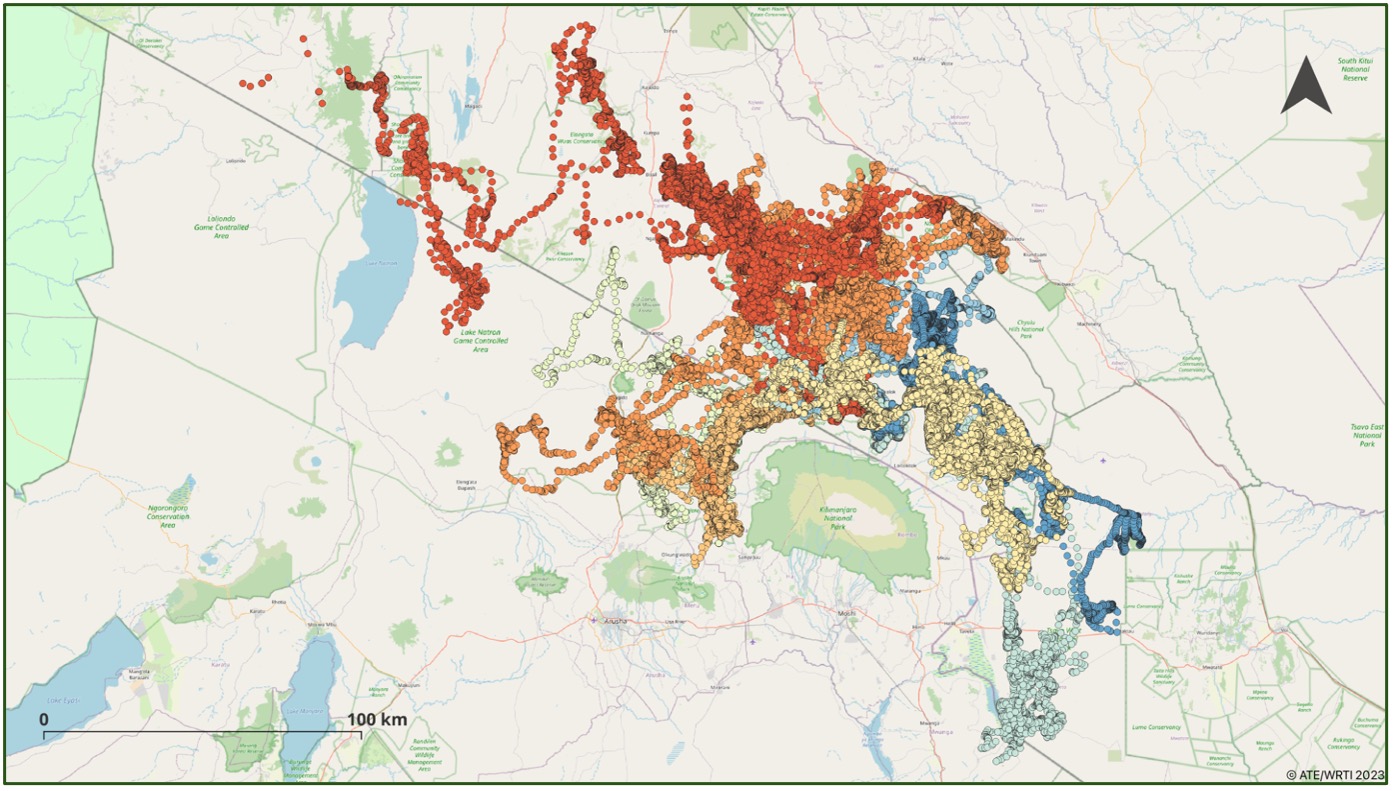
    Satellite tracking by Iain Douglas Hamilton in 1995-98, as well as extensive tracking of more than 30 individuals by Alfred Kikoti based in Tanzania, and more recent tracking by AERP reveals that elephants regularly move back and forth across the border and south into Tanzania, including in some cases across to Lake Natron. The map shown below, illustrates AERP’s recent (2019 to present) tracking results of eight young males from known Amboseli families. It is reasonable to assume that any elephant found in this area of Tanzania is part of the cross-border population and has been captured by AERP’s long-term study.

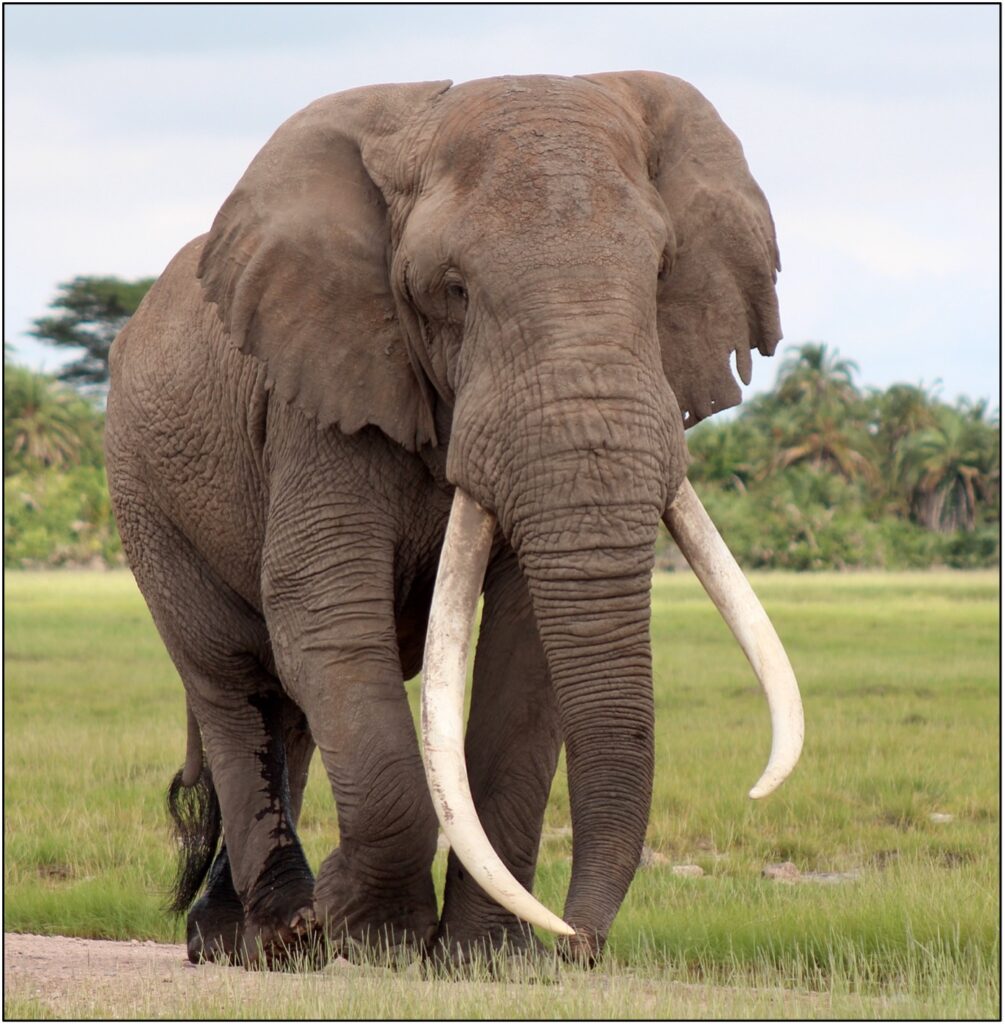
    The Amboseli population includes adult males with some of the largest tusks on the continent due to the particular genetic makeup of these elephants (the largest tusks ever collected and displayed in the British Museum come from this population) and to the years of protection from trophy hunting and poaching they have been afforded.

    Male elephants grow throughout their lifetime, as do their tusks. The males with large tusks that are targeted by trophy hunters are the older males in the population and the primary breeders in elephant society. Far from being “dead wood,” males who live to an old age produce a disproportionate number of offspring. Older, larger males are dominant to younger males, have longer musth (sexually active) periods and are preferred by females. By selecting older individuals, hunters not only have a damaging effect on elephant lives and society, but are negatively influencing the genetic future of the Amboseli population, not to mention the ecosystem’s tourism potential.

    Our position is that the Amboseli cross-border population should be protected from trophy hunting because it is unique and highly valuable as a scientific base of knowledge of elephants. In addition, it represents one of the last gene pools for large tusks. A successful moratorium held for 30 years. Surely, conservation alternatives can be found to conserve in perpetuity this cross-border population that should be viewed as a World Heritage. We appeal to the Tanzanian and Kenyan governments to work together to protect this cross-border population, to recognize its immense scientific value and to ensure that these treasured elephants are not the target of trophy hunters.

    The hunting of these individuals undermines conservation efforts, disrupts the social structure of elephant communities, and poses a significant threat to the future of this population.

    We implore you to recognize the scientific, ecological, and economic value of the Amboseli elephants and to grant permanent protection to these icons of Africa in the cross-border area that is part of their regular range.

    ElephantTrust.org shares that the ATE team has identified one of the males who was recently shot by sport hunters in Tanzania. He was 35 year old Gilgil, the son of Golda, matriarch of the GB family. His father was the magnificent Dionysus. He was the first of three elephants killed – Gilgil in September, another in November, and a third more recently. We have been informed that three more hunting permits have been issued.

    Urge the Tanzanian Government to Reinstate Cross-Border Wildlife Protection Agreement

    We urge the Tanzanian government to take immediate action by reinstating this critical cross-border agreement with Kenya. This move will demonstrate Tanzania’s commitment towards preserving global biodiversity and ensuring that future generations can appreciate the beauty and importance of these magnificent creatures.

    Stop The Maasai Evictions in Tanzania

    We are Maasai elders from Northern Tanzania. Any day now tens of thousands of our community could be forced off our ancestral lands to make way for elite tourism, trophy hunting and carbon trading. We urgently need your support.

  • A Safer, More Compassionate Festival Season

    A Safer, More Compassionate Festival Season

    September 2023, Mumbai, India.

    Leaving her office this September in the Bandra district of Mumbai, India, Ramya Rao was shocked to see an elephant participating in the Ganesh Chaturthi festival going on. Upon closer inspection Ramya realized the elephant is robotic. “I danced with joy literally! So real looking! Can we only have robotic elephants for all festivities and ban using real ones?” said Ramya.

    The life-like elephant, named Irinjadappilly Raman, was built by four young artisans from Thrissur, a district in Kerala India for Rs 5 lakhs. The mechanical elephant was inducted by the Irinjadappilly Sree Krishna Temple in Kerala. This was the first time a Kerala temple has used a mechanical elephant for its festival.

    PETA India, People for the Ethical Treatment of Animals, donated the mechanical elephant to the temple who welcomed the robot in a traditional ceremony called ‘Nadayiruthal’ in which offerings are dedicated to the deity.

    “The elephant figure has a height of 10.8 feet and with the wheels, around 11 feet tall. The core structure is made using steel and the outer material is rubber to give it a life-like feel. It weighs around 800 kgs and took us two months to complete,” said Prasanth Prakasan, the co-founder of Chalakkuduy-based Four He Arts, which created the elephant. The robotic elephant can move its head, eyes, ears, mouth, tail and trunk like a real elephant.

    Live elephants are widely used in religious festivities in Asia. The elephants are dressed in heavy cloth and jewellery, oftentimes covering their heads and ears. Some elephants are hobbled in chains forced to walk in large crowds of people who are shouting or chanting, fireworks are often going off above their heads, drums beating. Noisy atmospheres in unbearable heat with a handler nearby ready to beat or stab any elephant showing signs of wanting to get away.

    In Kandy, Sri Lanka this year at the annual Esala Perahera festival in August, live captive elephants used to carry cultural relics, ran amok sending one woman to the hospital. This is not a single event, in previous years deaths of human life have occurred. Vegan Sri Lanka created this petition to end elephant use in the Kandy Perahera due to cruelty and safety concerns. Please consider signing the petition and sharing it among your network.

  • Nepal Elephant Walk Sanctuary

    Nepal Elephant Walk Sanctuary

    (This blog post is reproduced with permission from Animal Nature Connect)

    Early December 2019 while in Sauraha Nepal I reached out to Sudha Dhakal by email. Sudha was listed as the contact person for a new elephant sanctuary I wished to visit – I read this sanctuary was to be created in Sauraha. Sudha replied to my inquiry the same day I sent it, inviting me to get together with her the next day. Sudha requested my professional advice explaining she was working on registering the sanctuary.

    9:00 am December 8th, 2019 Sudha picked me up at my hotel on her motorbike which is called a scootie. She asked me if I had any commitments to attend to later in the day while explaining the sanctuary board decided Sauraha was not the right location for their sanctuary. I shared my day was free. Sudha handed me a helmet. We were off to Golaghat.

    Leaving Sauraha, then leaving Tandi Bazaar now traveling on the main highway I realized I didn’t exactly know where Golaghat was located. Before leaving my hotel I sent a message to a friend sharing that I would be spending time with a person I didn’t know, her name and what we were doing. As an avid hiker this safety protocol is common, we often carpool with people we don’t know. Excited to be traveling on a scootie to a new place I settled my mind, looking forward to this adventure.

    Between Tandi Bazaar and Bharatpur the highway travels through jungle. This route had been taken by me many times in a taxi traveling to and from the Bharatpur airport. We often see monkeys eating trash on the side of the highway humans throw out of their car windows, we also see other forms of wildlife in the jungle along this route.

    Sudha and I tried to get to know one another by talking through our helmets and road noise. I shared about a common Facebook friend whom I hadn’t physically met associated with NEWS, this friend and I shared the same birthday – Sudha shared that my Facebook friend was the group’s inspiration for the elephant sanctuary. We were in the middle of the jungle section of the highway when the scootie slowed to a stop. Sudha tried starting the scootie several times as cars and trucks sped by us. The scootie refused to start. We pushed the scootie to the far shoulder of the highway while Sudha made a call to her husband for help. While waiting for help we kept moving forward pushing the scootie as we talked and I looked for monkeys. When Sudha’s husband and a friend of his arrived, we put Sudha and her scootie in the friend’s truck. I hopped on the back of Sudha’s husband, Salim’s motorcycle.

    Arriving in Bharatpur we stopped at a cousin’s restaurant to meet up with another member of the sanctuary board, their vice president who would give Sudha a ride to Golaghat. It was decided we would have lunch while waiting for this person to arrive, the group would sign documents while checking their sanctuary paperwork before taking the documents to the public office in Golaghat.

    Over a Dal bhat lunch we learned more about one another while waiting for Biggyan, the third board member I was to meet that day. When Biggyan arrived I shared with the group about attending school transitioning out of real estate, into elephant foot care and animal communication work. Sudha looked at me with a smile, sharing that in Nepal attorneys are also referred to as principals. When Sudha read my Facebook profile stating I was a principal broker she assumed I was an attorney. Now I understood what Sudha meant by wanting my professional advice while the group signed their sanctuary documents. These documents were drawn up to get approval by the community for the sanctuary. Although I couldn’t advise them on the documents I offered to photograph the group signing documents. We all had a good laugh.

    The public office in Golaghat is located in a rural grassy area surrounded by dirt roads, fields and homes. The group asked me to wait outside, a foreigner accompanying them would cause confusion. Sitting on a bench outside the public office with the sun shining on my face surrounded by community members I tried to understand the Nepali spoken around me when I looked up to see my group. Biggyan, Sudha, and Salim shared their request was immediately approved. They imagined we would be there for quite some time as the office went through all of the documents. We were at the public office for less than thirty minutes. Everyone was so happy. The group asked me if I wanted to see the sanctuary land. Before I knew it we were on our motorcycles headed to Biggyans land. With the documents approved Biggyan was donating this land to the sanctuary.

    Pulling up to Biggyans land I saw an old house surrounded by mustard and banana fields, in the distance was a long grove of trees. To the left of Biggyans land there is a large warehouse space, a factory that makes wool dryer balls – This made me laugh. I’ve yet to meet a Nepali with a clothes dryer. Everyone I know hangs their laundry outside to dry. As we climbed the old stairs for a better view to a second story which had no walls or roof, Biggyan told me the planting of the trees I saw in the distance was a planting project completed almost thirty years ago. These trees created a buffer zone between the township and Chitwan National Park. This project was inspired by Biggyans father. As I write this blog post I’m imagining all of the animals, insects, and plant species Biggyans fathers tree project helped to home, along with much needed carbon sequestration.

    The group offered to take me to visit the buffer zone, see the trees close up and have some food at Biggyans cousins who ran a restaurant bordering the buffer zone. Riding on the back of a motorcycle on unimproved dirt roads through banana fields to the cousins house was so much fun. At the first restaurant I had shared communication with a sick elephant at the breeding center near Sauraha who asked us to bring her turmeric leaves so the mahouts could feed the juice of the turmeric leaves to her. After arriving at his cousin’s place, Biggyan shared this elephant’s request with his cousin who immediately dug up fresh turmeric from his land with leaves intact – His cousin gifted me the turmeric bundled in an old rice bag to take back with me.

    We sat talking, laughing, sharing stories and food in a secluded restaurant in eyesight of the buffer zone of trees Biggyans father had planted with the community. I shared with the group an area of community forest near Biggyans land where I had trimmed elephant feet just a few weeks before. The story was this community forest area had been built in the 1950’s with metal cage like fencing as a place to keep tigers. No one in the group knew of this place – I explained how to get there the best way I could, sharing the community forest is by an old airport. Biggyan shared with the group there was a rhino in the area around his cousins restaurant who had recently lost her baby from a tiger attack, she was mourning her loss. It would not be safe to explore the buffer zone that day.

    While eating I noticed the time was 4:00 pm. I communicated to the group that I should contact my friend in Sauraha so she wouldn’t worry, my mobile didn’t have reception. We would stop at the first restaurant spot on the way back to Sauraha so I could contact my friend but first Biggyan wanted to show me where the Rapti and Narayani rivers meet, known to be the best sunset viewing spot in the region. The sunset was sublime. I arrived back to my hotel at 9:00 pm after an extraordinary day.

    Some months after returning to the United States Sudha contacted me to give thanks. The community forest with the old tiger fencing near the airport had been approved to be NEWS sanctuary land – This land is much larger for the elephants. Nepal Elephant Walk Sanctuary has non profit status and is accepting donations. https://www.nepalelephantsanctuary.org/

    This blog post and an upcoming project of Animal and Nature Connect is in honor of Biggyan Budhathoki who was killed in a road accident on February 3rd, 2021 at 26 years old. You were wise beyond your years beautiful friend.

    Biggyan Budhathoki
    Broken down scootie.
    Signing documents.


    Biggyans cousin, his wife and the turmeric.


    Biggyans land with the buffer zone trees.
    Sunset where the Rapti and Narayani rivers meet.
  • The Nonhuman Rights Project

    The Nonhuman Rights Project

    In 2016 I met Steven Wise at the historic Hollywood Theatre in Portland Oregon while screening Unlocking The Cage. This documentary follows attorney Steven Wise and his team making history by filing lawsuits on behalf of his animal clients. Steven argues his clients should be considered legal persons.

    The law defines a Legal Person as someone or some entity that has the capacity for legal right.

    Common law countries including the United States have given these rights to things we as humans might find unusual like corporations, ships, mosques, rivers, and holy books. A legal person means you count in a courtroom, you’re not invisible to judges.

    Steven’s Nonhuman Rights Project mission is to challenge an archaic, unjust legal status quo that views and treats all nonhuman animals as things with no rights. As with human rights, nonhuman rights are based on fundamental values and principles of justice such as liberty, autonomy, equality, and fairness. All of human history shows that the only way to truly protect human beings’ fundamental interests is to recognize their rights. It’s no different for nonhuman animals. It’s science.

    Meet NhRP Clients – Tommy, Kiko, Hercules, Leo, Beulah, Karen, Minnie, and Happy.

    Learn about the progress NhRP has made in the fight for nonhuman animal rights.

    What is the Nonhuman Rights Project? A video explainer

    Interview with Steven Wise https://www.youtube.com/watch?v=5Lx3iCBpBkI

    Unlocking The Cage Synopsis.

    Unlocking The Cage Trailer.

  • WHAT IS SANCTUARY?

    The words “Ethical Sanctuary” are being used without merit in all parts of the world to make money – Reminds me of the term “Eco” used in many facets in the tourism industry which are not environmentally sound. All three terms used to attract people who are just trying to do the right thing by the planet and animals but lack the knowledge. World Elephant Alliance is working on providing education with an active published list of elephant sanctuaries, rescue, and rehabilitation centers from around the world, detailing what each of them has to offer its elephants.
    This will provide needed transparency and guidance for the public.

    We asked each member of the World Elephant Alliance to write down what “Sanctuary” means to them. I am an animal communicator so I asked the elephants as a collective what they would like sanctuary to be for them – Here is their response.

    1. Freedom to play – A healthy environment containing nourishment for body and soul.
    2. Low vibration of energy – Openness and sincerity of expression.
    3. Good food – Healthy, fresh.
    4. Plenty of places to scratch on!
    5. Warm climate.
    6. Birds, insects, and animal friends.
    7. Telepathic Communication – With humans. 
    8. To be able to teach. We are teachers for humans. Humans think they know everything about us. We are all different in our thoughts.
    9. Playtime – Yes this again. Humans need to do more of this instead of working.

    Annette Hadaway is an Internationally known Certified Animal and Nature Communicator animalandnatureconnect.org

    Curious about telepathic animal communication? Being With Animals is a documentary film about animal communication by Salome Pitschen featuring my animal communication teacher Dr. Maia Kincaid. Now available to live-stream on Vimeo.

    Chendra awaiting sanctuary. Photo Credit: Colin Durfee freeoregonzooelephants.org